
伪娘
Has China’s industrial development squeezed others’ room for growth?: People’s Daily_我的网站

A | 7月19日,中国福利彩票双色球第2026082期开奖,当期全国共中出二等奖215注,其中10注花落珠海市香洲区44030207福彩销售站点,中奖彩票是一张1注10倍单式彩票,中奖奖金合计1223700元。
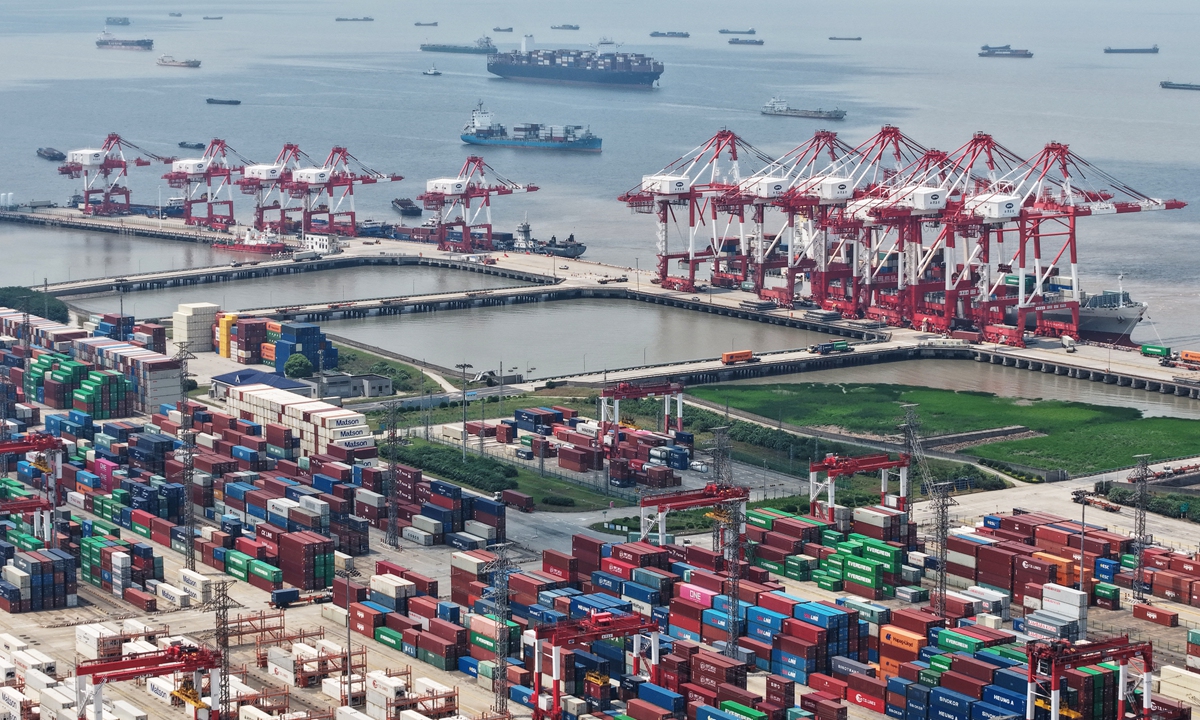
China's rapid rise in innovation capabilities has drawn broad recognition and positive assessments from the international community. However, some have taken a different stance, expressing concerns over China's technological and industrial advancement and even promoting the so-called "China Shock 2.0" narrative for various reasons, including the unfounded claim that China's industrial development is limiting others' growth opportunities.
A closer look reveals why this narrative does not hold up, for two fundamental reasons.
First, this narrative deliberately overlooks the inclusive, open and empowering nature of China's innovation.
China has always been a committed practitioner, active promoter, and major contributor to global economic, trade and technological cooperation. Through technological advancement and industrial upgrading, China has not only developed itself, but also provided the world with an increasing number of "innovation dividends."
For instance, digital economy, technological innovations in areas such as artificial intelligence applications, mobile payments and e-commerce have provided developing countries with valuable pathways for digital transformation. In the green energy sector, advances in China's photovoltaic, wind power and new energy vehicle industries have directly driven down the global cost of renewable energy, offering affordable solutions for countries tackling climate change. In consumer markets, high-quality, efficient, and cost-effective Chinese products have expanded global supply, reduced living costs and helped ease inflationary pressures worldwide.
Moreover, fast-growing Chinese innovation-driven companies have delivered returns of several times or even dozens of times for investors from around the world.
Companies from around the world can quickly find partners in China across the entire innovation chain, from research and development (R&D) and pilot production to mass manufacturing, making the commercialization of innovation more efficient.
They have not only succeeded in the Chinese market, but also strengthened their competitiveness globally. Facts have demonstrated that China's emerging technologies and products bring opportunities rather than shocks, and empowerment rather than threats to the world.
Second, it ignores the fundamental trends of technological innovation and the underlying dynamics of industrial evolution.
China's innovation has been built through years of strengthening its own capabilities. In recent years, the country has continued to increase investment in research and development, with its R&D spending ranking second globally.
Funding for basic research has reached a record high as a share of total R&D expenditure, while its pool of scientific and technological talent continues to expand. Through closer collaboration between the scientific community and industries, China has made rapid technological progress, driven continuous industrial upgrading and taken a leading position in some fields.
Innovation-driven development inevitably fuels industrial transformation and the dynamic reshaping of global production capacity, which is a natural outcome of international industrial division and cooperation.
For example, after years of technological accumulation, China has seized the opportunities created by the global green transition and developed competitive strengths in the "new trio" industries - new energy vehicles, lithium batteries and photovoltaic products - which have gained growing popularity in global markets. Portraying China's industrial upgrading as a "shock" is, in essence, a rejection of the broader historical trend of economic globalization.
"Innovation dividends" represent a positive-sum game, as the benefits of technological progress ultimately serve humanity. Distorting China's technological and industrial innovation and promoting the so-called "China Shock 2.0" narrative reflect outdated zero-sum thinking in some countries, while also revealing attempts to use criticism of China as a pretext to further advance protectionist policies.
Cutting through the rhetoric of protectionism, it becomes clear that the so-called "China Shock 2.0" narrative and "China overcapacity" claims are politically driven narratives that are detached from reality and lack factual basis.
Over the past decade, China has remained a major engine of global economic growth, contributing around 30 percent to global growth. In the past, China mainly provided the world with "market dividends" through its vast domestic market and cost advantages. Today, while continuing to offer greater "market dividends," China has also created "development dividends" by serving as a stable anchor and important hub for global industrial cooperation through its industrial growth. It is also providing the world with increasing "innovation dividends" through technological advancement.
China's market advantages, industrial development and technological progress are generating growing "market dividends," "development dividends" and "innovation dividends." These benefits, working together and reinforcing one another, are creating greater development opportunities and broader space for the world, offering a key perspective for understanding "China Opportunity 2.0."
Amid a complex and volatile international landscape and slowing global economic growth, innovation has become a crucial pathway to counter downward pressures and generate new growth momentum. Addressing global growth challenges requires greater cooperation in innovation. Rather than spending efforts on crafting the "China Shock 2.0" narrative, some countries should focus on domestic structural reforms and enhance their industrial competitiveness through openness and cooperation.
Embracing China means embracing the future. By using technological innovation to drive industrial innovation, China is accelerating the development of new quality productive forces. At the same time, China continues to expand high-level opening-up and provide new opportunities for the world through its own development. A more open and innovation-driven China will continue to deliver greater development dividends and work with countries around the world to build a more prosperous future.
This was compiled and translated by the Global Times English edition based on an article published in the "Chisu Jinsheng" economic commentary column of the People's Daily on August 7, 2026.
。

B | 中奖彩票 7月21日上午,中奖彩民王先生(化名)到珠海市福彩中心办理兑奖手续。据王先生介绍,他与福利彩票结缘多年,始终秉持理性购彩之心,闲暇之余喜欢买买双色球、快乐8彩票,这次幸运中奖的这组双色球号码是他的心水号码,已守号多年。

C | 在他看来,购彩是日常的休闲娱乐方式,更是助力公益之举。 “19号晚上双色球开奖,我像往常一样核对开奖号码,觉得开奖号码和我购买的号码很像,逐一核对后,惊喜发现自己中了10注二等奖。”谈及中奖感受,王先生难掩喜悦。

D | 王先生表示,未来会继续理性购彩,助力福彩公益事业,传递温暖力量。对于中奖奖金的使用,计划用于改善家庭生活。

E | 坚守公益初心,汇聚爱心力量。中国福利彩票为社会福利和公益事业而生,由国家特许发行,以筹集公益金为目的,始终秉承“扶老、助残、救孤、济困”的发行宗旨。一张张福利彩票凝聚着广大购彩者的爱心,肩负公益使命,以双色球为例,其销售额的36%纳入福彩公益金,每一张10元的双色球彩票,其中3.6元转为福彩公益金。其中,中央彩票公益金的60%用于补充全国社保基金,惠及民生。理性购彩,量力而行。
中国福利彩票,为社会造福,为生活添彩。
Current article:http://chs.shuicengchongmingnouhuawang.bond/3hr/20260826/4350.html
Published on:14:02:09
评论
-
关于我们 | 我的网站 版权所有
Copyright ? 2019 我的网站 All Rights Reserved